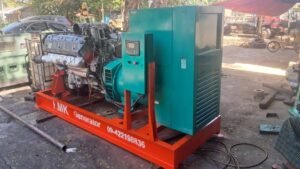
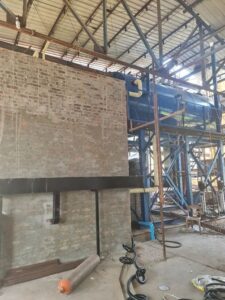
The Pandonmar Gasifier is a device designed to convert solid biomass or other carbon-based fuels into combustible gas, commonly called producer gas or syngas, through a controlled thermochemical process known as gasification. The system enables agricultural residues, wood, and other biomass to be efficiently transformed into a clean and usable energy source for industrial heating, boilers, engines, and power generation. The gasification process occurs in several stages: initially, the biomass is dried to remove moisture, then it undergoes pyrolysis, breaking down into volatile gases, tar, and char. A portion of the biomass is combusted to provide the necessary heat, and finally, the char reacts with gases such as carbon dioxide and steam to produce syngas, primarily composed of carbon monoxide, hydrogen, methane, and nitrogen. A Pandonmar Gasifier consists of key components including a fuel hopper to feed biomass, a gasification chamber where the reactions occur, an air supply system to control oxygen levels, a gas outlet to direct the syngas for use, and filters or cyclones to remove ash and tar. Gasifiers can be classified into updraft, downdraft, and fluidized bed types, each differing in gas flow direction, tar production, and efficiency, with downdraft gasifiers generally producing cleaner gas suitable for engines. The produced syngas serves multiple applications, including powering boilers and furnaces, running internal combustion engines for electricity generation, providing heat for industrial processes, and supplying energy in rural areas for cooking or heating. The Pandonmar Gasifier offers significant advantages by converting low-value biomass into usable energy, reducing dependence on fossil fuels, and lowering emissions compared to direct biomass combustion. Safe operation requires careful control of airflow, regular maintenance, and filtering to prevent tar accumulation, gas leaks, or backfire hazards. Overall, the Pandonmar Gasifier represents a sustainable and efficient energy technology that transforms biomass into a versatile fuel, supporting industrial, agricultural, and rural energy needs while promoting environmental sustainability and resource optimization.